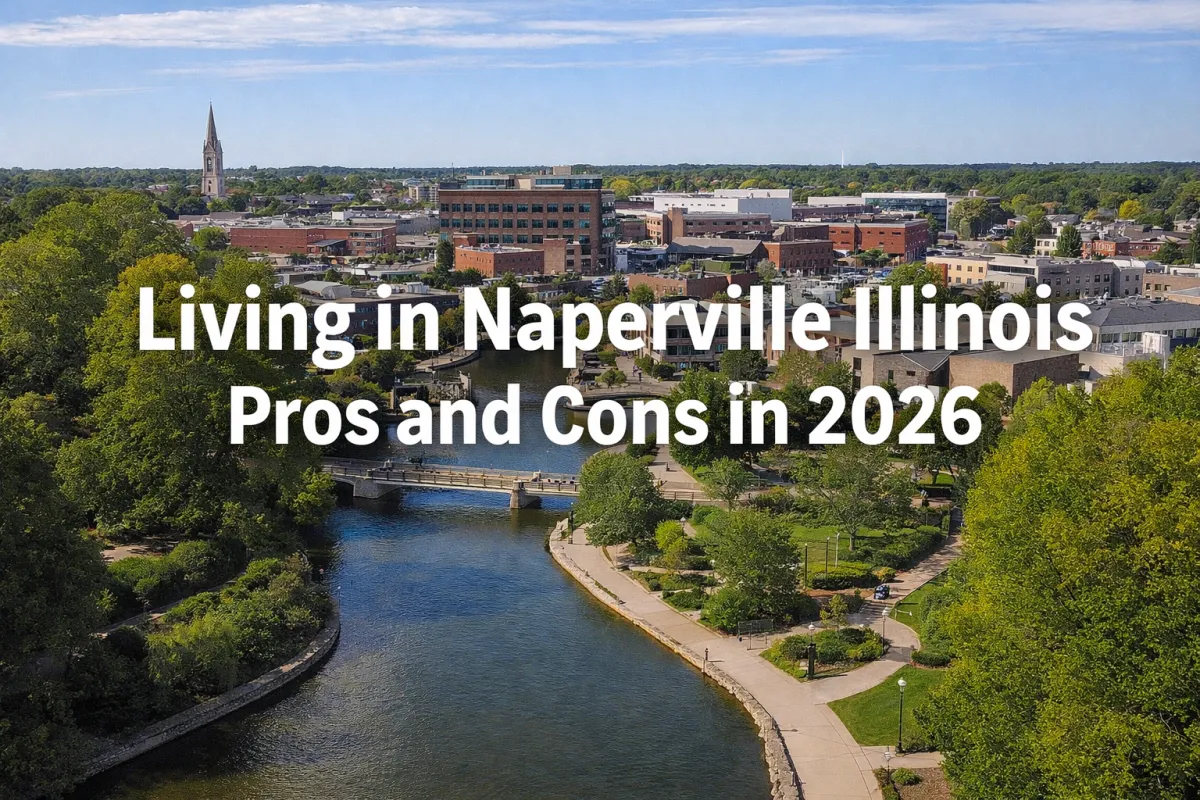
Living in Naperville, Illinois: A Realistic Look at the Pros and Cons in 2026
Living in Naperville, Illinois: A Realistic Look at the Pros and Cons in 2026
Naperville is regularly ranked as one of the best places to live in the United States, especially among large suburbs. Strong schools, a vibrant downtown, and long-term property value continue to draw buyers. However, living in Naperville in 2026 also comes with real trade-offs that buyers and sellers should understand before making a move.
This guide breaks down the verified pros and cons of living in Naperville in 2026 so you can decide if it aligns with your lifestyle, priorities, and budget.
Why Buyers Continue to Choose Naperville in 2026
Naperville is located roughly 30 miles west of downtown Chicago and spans both DuPage and Will counties. It offers suburban living with access to commuter rail, major highways, and a wide range of amenities that appeal to families, professionals, and long-term homeowners.
Highly Rated Public Schools
One of Naperville’s strongest draws remains its public school system. The city is primarily served by Naperville Community Unit School District 203 and Indian Prairie School District 204.
Both districts consistently rank among the top school districts in Illinois and are known for:
Strong academic performance
Advanced placement and honors programs
STEM and technology-focused coursework
Fine arts, music, and extracurricular activities
Competitive athletics
School boundaries also create smaller neighborhood communities within a large city, which many residents say helps Naperville feel more connected and manageable.
Downtown Amenities and Community Lifestyle
Naperville’s downtown remains one of the most active suburban downtowns in the Chicago metro area. The Naperville Riverwalk continues to be a focal point, offering walking paths, public art, fountains, and seasonal events along the DuPage River.
Downtown Naperville includes hundreds of restaurants, shops, and services, along with:
Centennial Beach, a public swimming facility built in a former quarry
A nationally recognized public library system
Extensive park district facilities and programs
Community events and festivals throughout the year
These amenities contribute to Naperville’s reputation for quality of life and walkability in certain areas.
Long-Term Home Value and Stability
Naperville has historically shown strong long-term home value retention compared to many nearby suburbs. Demand remains steady due to limited housing inventory, school quality, and the city’s overall reputation.
Additional factors supporting stability include:
Lower crime rates compared to similarly sized cities
Consistent municipal services
Ongoing city planning and infrastructure management
While market conditions shift year to year, Naperville continues to attract buyers focused on long-term ownership rather than short-term speculation.
Challenges of Living in Naperville in 2026
Despite its strengths, Naperville is not the right fit for everyone. Buyers should weigh the following considerations carefully.
Higher Cost of Living
Naperville’s popularity contributes to a higher overall cost of living compared to both the Illinois and national averages.
Housing costs are the most significant factor:
Home prices are higher than many surrounding suburbs
Newer construction and downtown properties command premium pricing
Property taxes remain substantial due to higher assessed values
In addition, residents are impacted by a local grocery tax implemented after the elimination of a former state tax, which adds to everyday household expenses.
Traffic and Transportation Realities
Traffic congestion remains one of the most common concerns among Naperville residents. Major corridors such as Route 59, 75th Street, and Washington Street experience delays during peak commuting and school hours.
While Metra rail service provides access to downtown Chicago, most residents rely on personal vehicles for daily transportation. Winter weather can further increase commute times and congestion.
Infrastructure Investment and Growth Pressure
Naperville’s population has grown steadily over time, exceeding 150,000 residents. As a result, the city is actively investing in infrastructure improvements, including:
Utility and electrical system upgrades
Water and sewer replacements
Road and transportation projects
These investments are necessary for long-term sustainability but mean ongoing construction in various parts of the city.
Academically, while the schools are highly regarded, some families report increased pressure due to the competitive environment, particularly at the high school level.
What’s Ahead for Naperville
Naperville continues to evolve through redevelopment and modernization efforts. Mixed-use projects, downtown apartment growth, and transit-oriented development near the train station are reshaping parts of the city.
Demographic trends show:
Empty nesters seeking walkable areas and lower-maintenance living
Young professionals moving into downtown and transit-accessible housing
Continued demand from families prioritizing education
Is Naperville Right for You in 2026?
Naperville tends to be a strong fit for buyers who:
Prioritize public schools
Value long-term home stability
Want suburban space with urban-style amenities
It may be less ideal for buyers who:
Are highly cost-sensitive
Prefer minimal traffic or car-free living
Want lower property taxes and lower density
Living in Naperville in 2026 offers a high quality of life, excellent schools, and long-term stability, but it comes with higher costs, traffic, and competition.
Understanding both the advantages and challenges helps buyers and sellers make informed decisions. Working with a local real estate professional who understands Naperville at the neighborhood level is essential to navigating the market successfully.
📞 Team Elite Realtors
Baird & Warner | Naperville and Western Suburbs
Phone: 630-286-9777
Email: [email protected]
🌐 homesbyteamelite.com