
What Is Earnest Money and How Much Do You Need When Buying a Home in Illinois?
If you're buying a home in Illinois for the first time, or even if you've done it before, the earnest money conversation can feel confusing. How much do you need? Where does it go? What happens if the deal falls through?
Here's what you actually need to know.
What Is Earnest Money?
Earnest money is a good-faith deposit that a buyer submits when making an offer on a home. It shows the seller that you're serious. Think of it as putting skin in the game. It tells the seller you're not just kicking tires, you're ready to move forward.
The money doesn't go to the seller when you submit it. It goes into an escrow account, typically held by the real estate attorney or the title company, until closing. At closing, the earnest money is credited toward your down payment or closing costs. It's your money the whole time, just held in trust.
If the deal closes, the earnest money goes toward what you owe. If the deal falls apart, what happens to that money depends on why it fell apart and what your contract says. That's the part most buyers don't understand well enough before they sign.
How Much Earnest Money Do You Need in Illinois?
There's no fixed legal requirement in Illinois. The amount is negotiated between buyer and seller. In the western suburbs market, Naperville, Aurora, Oswego, and Plainfield, the typical earnest money deposit runs between 1 and 3 percent of the purchase price.
On a $400,000 home, that means roughly $4,000 to $12,000. On a $600,000 home, you could see anywhere from $6,000 to $18,000. In a more competitive offer situation, a higher earnest money deposit can signal commitment and make your offer stand out when multiple buyers are in play.
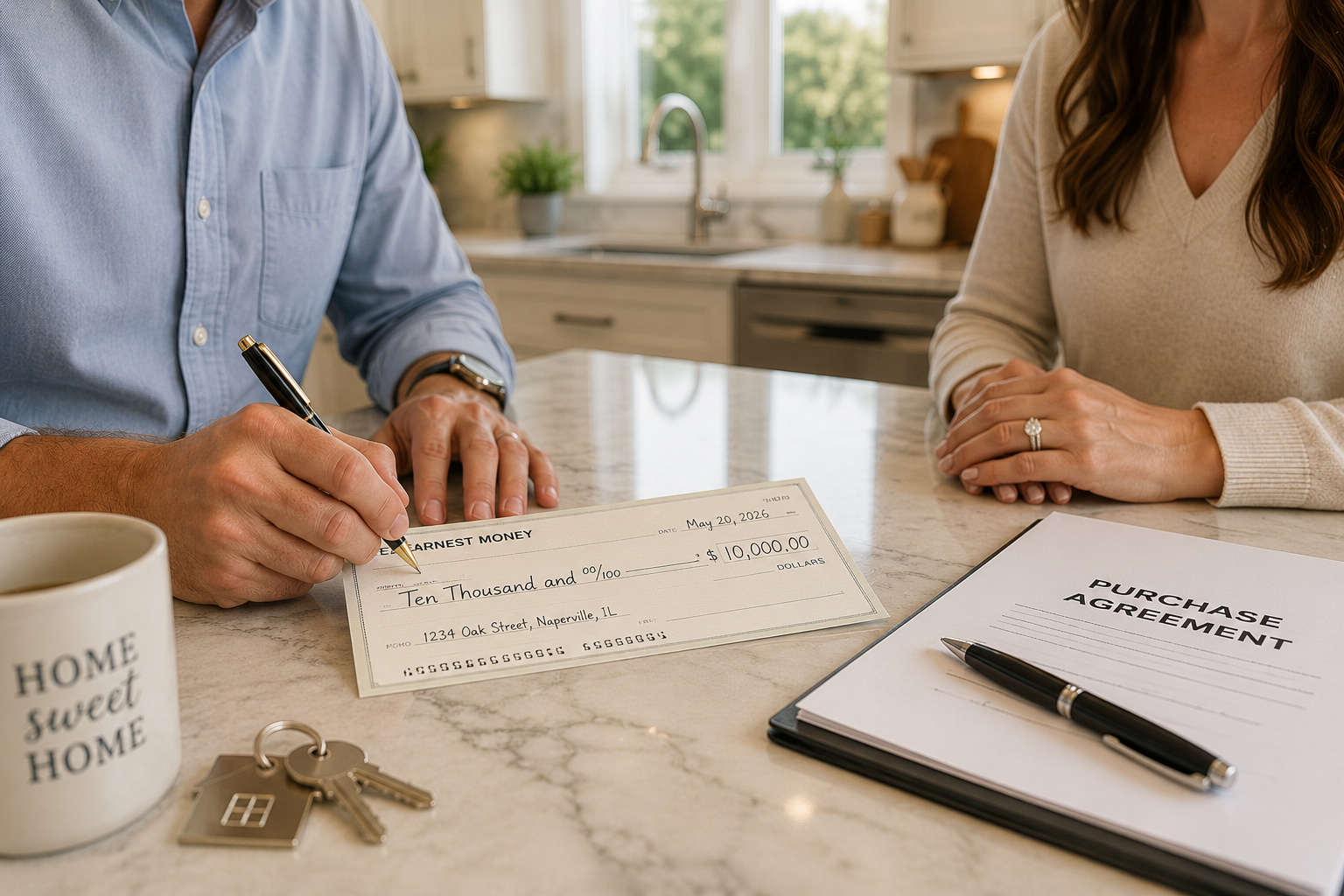
In highly competitive situations, some buyers offer $10,000 or more in earnest money as a show of strength. We help our clients decide what makes sense based on the specific property, the level of competition, and how much risk they're comfortable with.
When Can You Get Your Earnest Money Back?
This is where it matters to have a good agent and a good real estate attorney. In Illinois, buyers typically have a defined attorney review and inspection period after the contract is signed. During this window, if an issue is discovered during the inspection or an attorney raises a concern, the buyer can generally walk away and get their earnest money back.
If you walk away after the inspection period is over without a valid contractual reason, you risk losing the deposit to the seller. Each contract is different. Your attorney and your agent should explain the exact terms of every contingency before you sign.
The mortgage contingency is another key protection. If you've made a good-faith effort to get financing and you can't get approved, most contracts allow you to exit and recover your deposit. But the language matters, and vague contract language can create disputes.
What Sellers Need to Know About Earnest Money
As a seller, earnest money is one signal of buyer quality. A higher deposit can suggest a more motivated buyer. But a large deposit alone doesn't guarantee a smooth closing. We evaluate offers with sellers based on the full picture: price, financing terms, contingencies, closing timeline, and deposit amount together.
We've seen buyers walk away at the last minute and we've navigated those situations. Having an agent who reads contracts carefully and knows what language protects you is not a nice-to-have. It's essential.
Whether you're buying or selling in Naperville, Aurora, Oswego, or Plainfield, our team walks you through every line of the contract before you sign. Baird and Warner has been in Chicagoland since 1855. We're not going anywhere, and neither is our commitment to protecting your transaction. Start your search on Zenlist or book a consultation here to get started.
Frequently Asked Questions
How much earnest money should I offer when buying a house in Illinois?
In the western suburbs, 1 to 3 percent of the purchase price is typical. In competitive situations, offering more can strengthen your offer. Your agent should guide you based on the specific property and market conditions.
Is earnest money refundable in Illinois?
It can be, depending on your contract and when in the process you exit. During the attorney review and inspection period, buyers generally can exit and recover the deposit. Walking away after that window closes without a valid contract contingency puts the deposit at risk.
Where does earnest money go when buying a house near me in Naperville or Oswego?
Earnest money is held in an escrow account by the buyer's or seller's attorney or the title company. It's applied to your down payment or closing costs at the final closing. It doesn't go to the seller unless there's a contract dispute over a failed transaction.
Earnest money isn't complicated once you understand how it works. But getting the amount and the contract language right matters. That's exactly what we're here for.
Julia Corkey & Vickie Schoenfeld
Team Elite Realtors at Baird & Warner
630-286-9777 | [email protected] | www.homesbyteamelite.com
Book a Consultation | Buyer Inquiry Form | Search Homes on Zenlist
Follow us: Facebook | Instagram | YouTube
Licensed REALTORS proudly serving Naperville, Aurora, Oswego, Plainfield and the Western Chicago Suburbs